


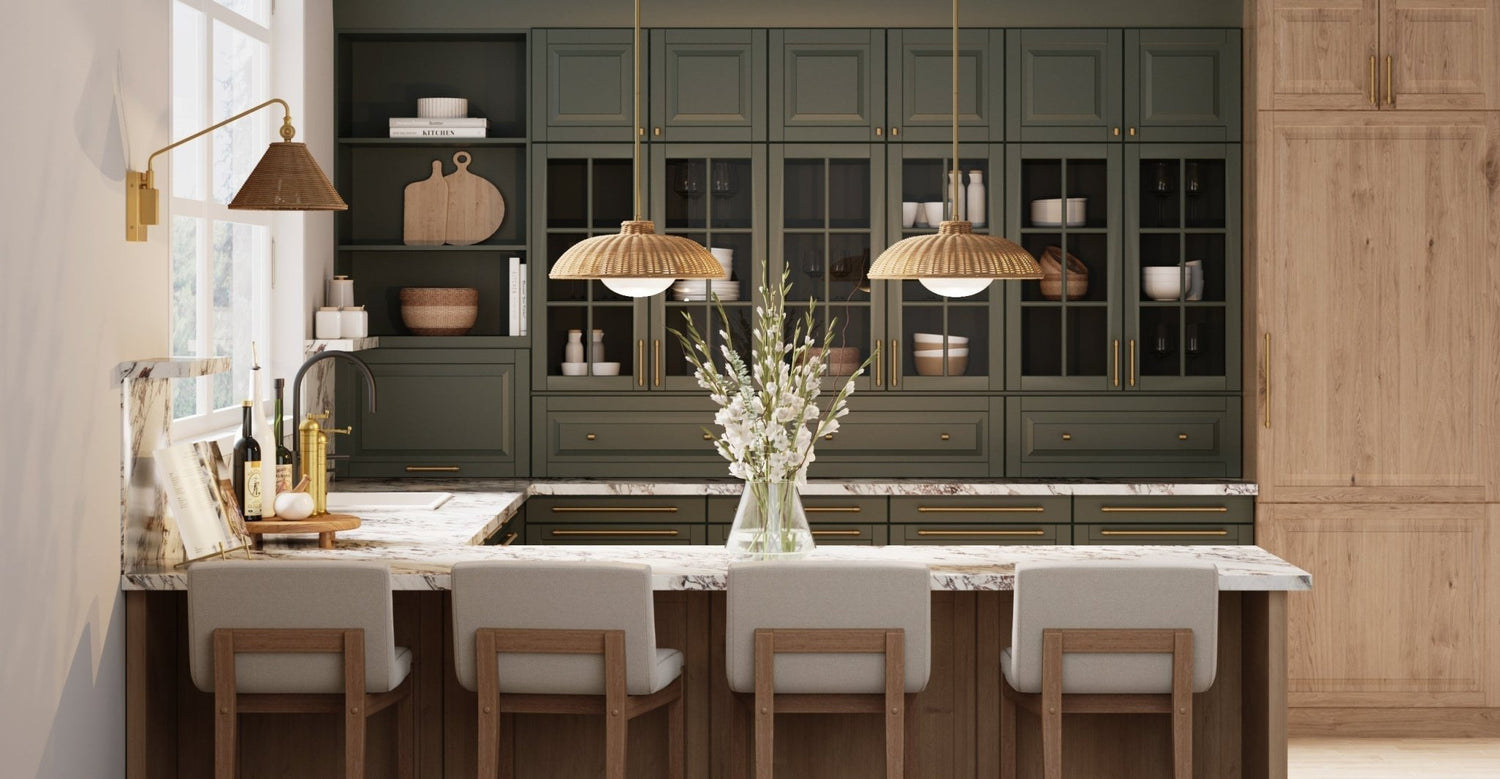
Choosing bar stools is not just about style. It is about comfort, spacing, movement, and long-term usability. Most people underestimate how much planning goes into seating a kitchen island correctly. The result is often stools that feel cramped, awkward, or visually unbalanced.
At Nathan James, we design modern bar stools to work in real homes, which means understanding the practical side of layout just as much as the aesthetic side. This guide walks you through everything you need to confidently determine:
-
How many bar stools your counter can realistically fit
-
How much space each person actually needs
-
How height affects comfort
-
How layout changes your seating count
-
What designers do differently
-
How to avoid expensive measuring mistakes
By the end, you will know exactly what works in your space and why.

Why Getting the Right Number of Bar Stools Matters for Comfort and Design
The number of bar stools you choose directly affects how your kitchen functions every day. Seating that is too tight creates elbow collisions, blocked walkways, and visual clutter. Seating that is too sparse can make a large island feel empty and under designed.
Bar stools are used for:
-
Quick breakfasts
-
Homework and laptop work
-
Casual entertaining
-
Overflow dining during holidays
-
Daily family interaction
Because they serve so many purposes, they must support both movement and comfort.
When designing modern bar stools, Nathan James prioritizes proportions that work with today’s open-concept kitchens. Slim frames, supportive backs, and thoughtfully scaled seats allow you to maximize seating without overwhelming the room.
The right number creates:
-
Natural conversation spacing
-
Easy entry and exit
-
Balanced visual symmetry
-
Clear walking paths
The wrong number creates frustration.
Step 1: Measure the Usable Length of Your Counter the Right Way
Before calculating stool count, you must measure properly. Many people measure the entire island length, but not all of that space is usable for seating.
Here is what to include and exclude:
Include:
-
The flat seating edge where knees will tuck under
-
Only the portion with adequate overhang
Exclude:
-
Decorative end panels
-
Waterfall edges
-
Cabinet walls
-
Sink or cooktop sections
-
Any portion without overhang
If your island is 96 inches long but 10 inches on each end are decorative panels, your usable seating space is closer to 76 inches.
At Nathan James, we often recommend subtracting a few extra inches from your total length if you want a clean, high-end look. That breathing room creates visual balance, especially when pairing stools with pendant lighting.
Pro Tip: If you want the layout to feel open and elevated, subtract 3 to 6 inches on each end to create intentional spacing.
Understanding Standard Bar Stool Spacing and Why 24 Inches Is the Minimum
Spacing determines comfort more than almost anything else.
The standard guideline is:
-
Absolute minimum: 24 inches per stool
-
Ideal comfort range: 26 to 28 inches per stool
Why the extra space matters:
-
Adults need elbow room while eating
-
Guests shift in their seats
-
Larger body types require more comfort
-
Entertaining requires flexibility
Nathan James bar stools are designed with compact but comfortable footprints. Many of our modern counter stools feature slim metal frames and streamlined backs, making them ideal for achieving that 26-inch comfort spacing without sacrificing seating count.
Example calculations:
72 inches usable space
-
72 ÷ 24 = 3 stools
96 inches usable space
-
96 ÷ 26 = 3.6 stools
-
Round down to 3 for spacious layout or 4 for full capacity
When in doubt, prioritize comfort over squeezing in one more seat.
Bar Stool Height Explained So You Avoid Ordering the Wrong Size
Bar stool height mistakes are one of the most common reasons for returns. The seat must align properly with the underside of the counter.
Standard counter heights:
-
35 to 37 inches from floor
Ideal stool seat height:
-
24 to 26 inches
Standard bar heights:
-
40 to 42 inches from floor
Ideal stool seat height:
-
28 to 30 inches
Nathan James offers both counter height and bar height options in many of our best-selling designs, allowing homeowners to match their kitchen layout without compromising style consistency.
To measure correctly:
- Measure from floor to bottom of counter surface.
- Subtract 9 to 12 inches.
-
That number is your target seat height.
This ensures:
- Proper knee clearance
- Comfortable arm positioning
- Natural posture
How Different Island Layouts Change How Many Stools You Can Fit
Not all islands are straight rectangles. Layout changes spacing logic.
Straight Islands
Measure the straight seating edge and divide by 24 to 28 inches. If you are pairing stools with Nathan James pendant lighting or statement fixtures, consider centering stools beneath the lights for symmetry.
L Shaped Islands
Corners reduce usable seating. Avoid placing stools directly in the corner. Stop seating at least 12 inches before the turn and focus on the longest uninterrupted edge.
Peninsula Counters
Before calculating stool count:
-
Confirm minimum 12 inch overhang
-
Confirm at least 36 inches of walkway clearance
-
Make sure drawers or appliances will not collide with stools
Many Nathan James stools feature footrests and slim profiles that tuck cleanly under peninsulas, helping preserve traffic flow.
Why Bar Stool Width and Arms Change Your Spacing Formula
Spacing rules assume armless stools that are 16 to 18 inches wide.
If your stools have arms:
-
They can measure 20 to 24 inches wide
-
They require 26 to 30 inches of spacing
Nathan James designs many of our bar stools with sleek, low-profile arms or open backs specifically to reduce bulk. This makes it easier to achieve proper spacing in compact kitchens.
Always measure the widest part of the stool including arms or flared backs. Width directly impacts how many stools fit.
Do Not Forget Walkway Clearance Behind the Stools
Even if stools fit perfectly along the counter, the kitchen must remain functional.
Minimum clearance behind stools:
-
36 inches for light household traffic
-
42 to 48 inches for high traffic or entertaining spaces
If your island sits in a tighter kitchen, choosing three well-spaced Nathan James stools instead of four crowded ones often creates a more refined, designer look.
Function should always guide the decision.
Should You Always Fill Every Possible Inch of Space?
No. Modern kitchens benefit from restraint.
Nathan James design philosophy centers around intentional spacing and clean silhouettes. Leaving breathing room at the ends of an island often elevates the entire room.
Designers frequently:
-
Leave slight space at both ends
-
Align stools with pendant lights
-
Choose fewer stools for a minimalist aesthetic
The best layout is not always the maximum capacity layout.
Common Planning Mistakes That Lead to Returns
Avoid these frequent errors:
-
Measuring top surface instead of usable seating edge
-
Ignoring decorative end panels
-
Forgetting about arm clearance
-
Forgetting overhang depth
-
Choosing bar height instead of counter height
- Ignoring walkway clearance
Careful planning ensures your Nathan James stools arrive ready to fit seamlessly into your space.

Frequently Asked Questions About Bar Stool Spacing
How many bar stools fit on a 6 foot island?
A 6 foot island equals 72 inches. You can fit 3 stools comfortably using standard spacing guidelines.
Can you fit 4 stools on a 7 foot island?
Seven feet equals 84 inches. Four stools may technically fit, but three often feels more spacious and balanced.
Is 24 inches enough space between bar stools?
24 inches is the minimum. For greater comfort, 26 to 28 inches is ideal.
How much overhang do you need for bar stools?
Minimum overhang is 12 inches for proper knee clearance.
Should bar stools line up with pendant lights?
Yes. Aligning stools with lighting creates symmetry and visual balance.
What size bar stools does Nathan James offer?
Nathan James offers both counter height and bar height stools in modern designs that prioritize slim proportions, durable materials, and everyday comfort.
Final Answer: How Many Bar Stools Do You Really Need
Take your usable seating width and divide it by 26 inches for ideal comfort. Then confirm:
-
Counter height compatibility
-
Stool width
-
Walkway clearance
-
Overhang depth
-
Visual symmetry
The correct number balances comfort, movement, and modern design.
When thoughtfully planned and paired with well-proportioned seating like Nathan James bar stools, your island will feel intentional, spacious, and built for everyday living.


