Bar Stools: Comfort Meets Style in Design
The best bar stools do more than fill the space beneath an island. They shape how your kitchen feels—relaxed enough for morning coffee, comfortable enough for a long conversation, and polished enough to look intentional from every angle.
Fit still matters, but it doesn’t need to take over the conversation. Our guide to choosing the perfect bar stools for your space covers height, spacing, and other measurements. Once those basics are settled, the more interesting question is how to bring comfort and style together.
Comfort starts with the silhouette
Cushioning gets a lot of attention, but the overall shape of a stool can be just as important. A gently curved seat, rounded back, or wraparound frame creates a more settled place to sit while adding softness to a room filled with straight cabinetry and hard surfaces.
Consider how much visual presence you want your seating to have. Backless bar stools keep sightlines open and let the island remain the focal point. Bar stools with backs create a stronger outline and make the seating feel more substantial.
Neither approach is automatically better. It comes down to whether you want the stools to blend into the kitchen or become part of its visual identity.

Design for how your kitchen is actually used
Rather than shopping for a picture-perfect kitchen, think about what really happens at your island.
For quick breakfasts and casual coffee breaks, a streamlined seat may be all you need. If the island also functions as a dining table, workspace, homework station, and gathering spot, a more supportive design with an upholstered seat and defined back may feel better over time.
The silhouette can communicate that difference immediately. The Veya collection, for example, offers both fuller, sculptural shapes and lighter backless options. The Gracie collection has a more tailored look, with open wood details, upholstery, and multiple finish combinations.
The right choice is not necessarily the most padded option. It is the one that fits how long people sit, how they naturally use the island, and how much visual space you want the seating to occupy.
Balance the visual weight of your island
Your island and stools are read as one composition, so their proportions should complement each other.
A dark or substantial island can benefit from stools with slim legs, open backs, or visible space beneath the seat. These details prevent the center of the kitchen from feeling too heavy. A simple island with a clean slab front can handle a fuller upholstered stool or a more expressive, curved silhouette.
Contrast can also make the design feel more intentional. Light upholstery breaks up dark cabinetry. Warm wood adds depth to an all-white kitchen. Black metal can connect the stools to cabinet hardware or nearby accents.
You do not need to match every finish exactly. Repeating one or two elements is usually enough to make the stools feel connected to the room.
Layer materials instead of matching everything
Some of the most interesting stools combine materials rather than relying on a single finish. Wood brings warmth, upholstery adds softness, metal creates structure, and woven details introduce texture.
Start with one material already used in your kitchen, then allow the stool to add something new. If your cabinetry or flooring has a warm wood tone, look for a stool that repeats that warmth while introducing boucle, fabric, rattan, seagrass, faux leather, or metal.
The Bailey collection shows how an upholstered seat and woven texture can work together in the same design. For an even softer, more tactile direction, the boucle collection includes bar stools in a range of silhouettes and material combinations.
The goal is coordination, not duplication. A stool should look like it belongs in the room without appearing as though every surface was selected from the same sample card.

Let upholstery help set the mood
Upholstery influences both the comfort and personality of a stool. Cream and neutral fabrics feel soft and relaxed. Deeper brown finishes can make the seating look warmer and more tailored. Textured boucle adds dimension even when the color palette is quiet.
Think about whether you want the seat to contrast with the island or blend into it. Light upholstery will stand out against dark cabinetry, while a tonal combination creates a calmer, more seamless look.
Practicality matters too. Review the material and care information before choosing a finish, especially when the island is used for everyday meals. A beautiful stool should be something you feel comfortable using—not something everyone is afraid to sit on.
Coordinate the full room, not just the island
In an open-plan home, bar stools are rarely seen on their own. They share a sightline with dining chairs, cabinetry, flooring, and nearby living-room furniture.
Those pieces do not have to match exactly. Instead, repeat one or two characteristics throughout the space: a similar wood tone, upholstery color, curved back, woven detail, or leg shape. This creates continuity without making the room feel overly coordinated.
For a more cohesive arrangement, explore matching bar stools and dining chairs. For a collected look, keep the general shapes or finishes related while varying the texture.
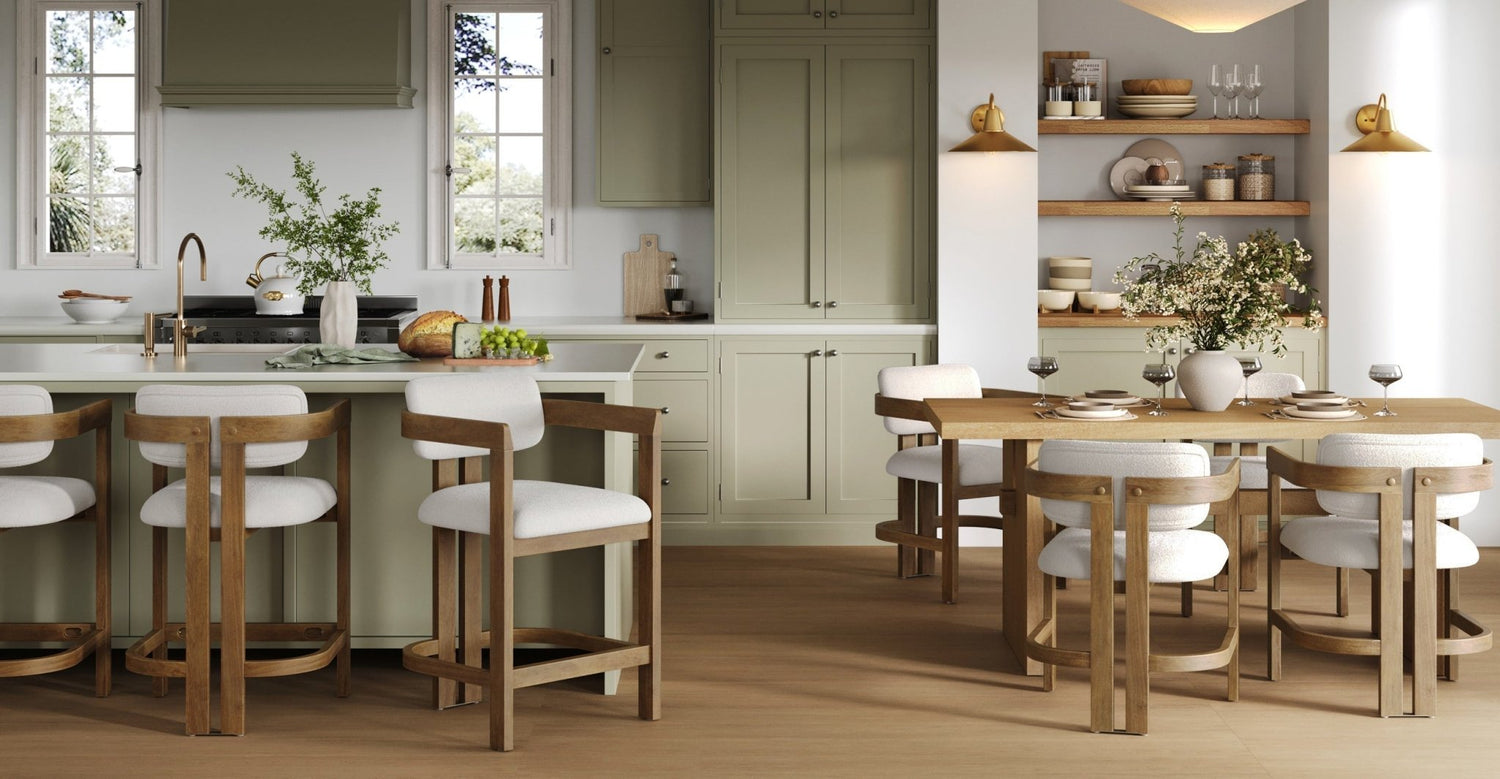
Because stools repeat across an island, even small details have a strong visual effect. A row of open frames creates a light, architectural rhythm. Upholstered backs form a more noticeable band of color and texture. Using bar stool sets keeps the lineup consistent, but you can also vary finishes within the same collection when you want subtle contrast.

Look at the stool from every angle
A bar stool is one of the few pieces of furniture that may be viewed from the back more often than the front. Before making a decision, look at the complete silhouette—not just the seat.
Consider how the back appears from the living or dining area, whether the footrest feels integrated into the frame, and whether the edges and proportions look inviting. Details such as curves, upholstery seams, woven panels, and tapered legs can have as much influence on the room as the stool’s color.
Ultimately, the best stool is not the most decorative or the most heavily cushioned. It is the one that supports the way you live while making the kitchen feel more complete.
Browse the full collection of bar stools with one question in mind: Do I want my island to feel airy, sculptural, tailored, or soft? Once you know that, finding the right balance of comfort and style becomes much easier.