How to Decorate Around a TV Stand
The best way to decorate around a TV stand is to treat the television, console, and surrounding wall as one arrangement. Start with a TV stand that's proportional to your screen, keep surface decor low and simple, add visual weight beside or above the TV, and repeat a few colors and materials from the rest of the room.
You don't need to disguise the TV-or fill every inch around it. A little balance, texture, storage, and open space can make the whole setup feel like a natural part of your living room.

How Should You Decorate Around a TV Stand?
Start with the TV stand itself. Its size, finish, and design should guide what you add around it.
If your console has warm wood tones, repeat those tones in small ways with a coffee table, picture frames, or other furniture details. A black console can feel lighter when paired with cream, white, or natural textures, while a lighter wood or white piece can handle darker accents for contrast.
For a mid-century modern TV stand, look for decor with similarly simple lines and organic shapes. Rounded ceramics, sculptural objects, warm woods, and understated metal accents can complement the furniture without making the room feel like a mid-century theme.
The goal is connection rather than perfect coordination. Repeating one or two finishes or shapes throughout the room is usually enough.
Should a TV Stand Be Wider Than the TV?
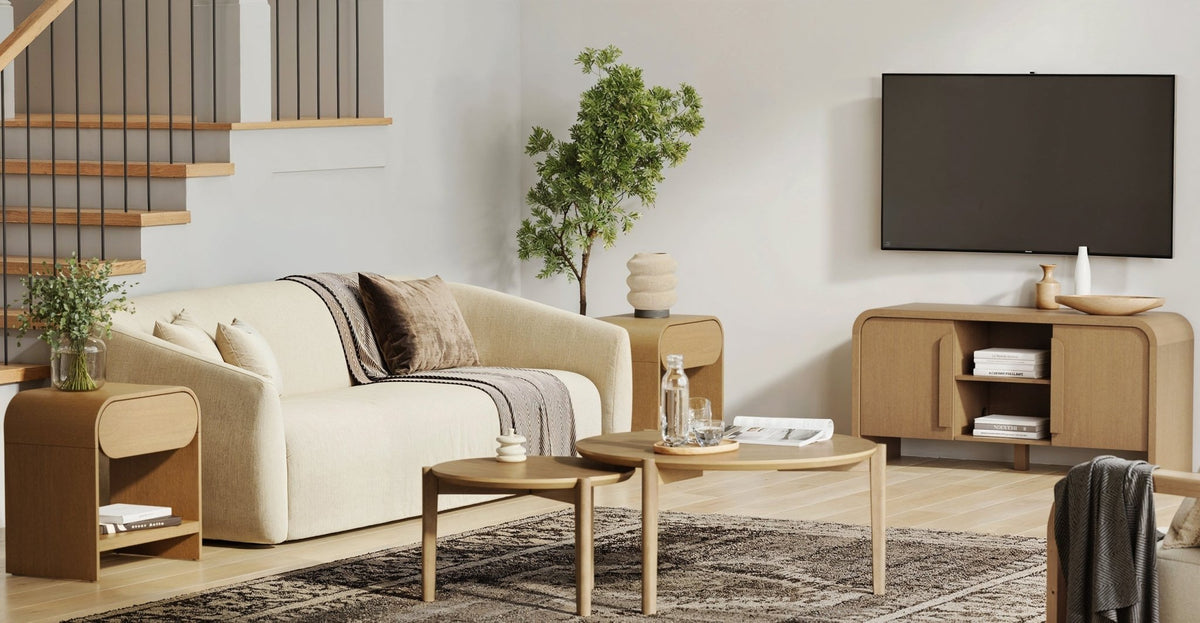
In most living rooms, a TV stand looks more balanced when it's wider than the television. The extra width gives the screen a visual base and leaves a little breathing room on either side.
Start by looking at your TV's overall width-not only its advertised diagonal screen size-and compare it with the dimensions of the console you're considering.
For an easier starting point, shop by television size. Nathan James offers TV stands for 55–65-inch TVs, TV stands for 65–75-inch TVs, and extra-wide TV stands for larger setups.
The wall matters, too. A smaller console can work well in a compact living room where open space keeps things feeling light. On a long wall, a wider console or entertainment center can create a more proportional arrangement without relying on lots of extra decor to fill the space.
What Should You Put on a TV Stand?
Keep TV stand decor low, edited, and functional. Two or three objects are often enough.
Try these options:
- A low ceramic bowl or tray for remotes
- A short stack of books
- A small plant
- A sculptural object
- A short vase
- A candle or diffuser placed safely away from electronics
Mixing shapes and materials keeps the arrangement interesting, but avoid placing tall decor directly in front of the screen.
Also leave enough room for anything you use every day, including soundbars, speakers, gaming systems, or remotes.
And if your TV console already has standout details—think arched doors, fluting, interesting hardware, or beautiful wood grain—you can keep the surface even simpler. Sometimes the furniture is the decor.
What Should You Put on Either Side of a TV Stand?
You don't need identical pieces on each side of your television. You just need enough visual weight to make the overall arrangement feel balanced.
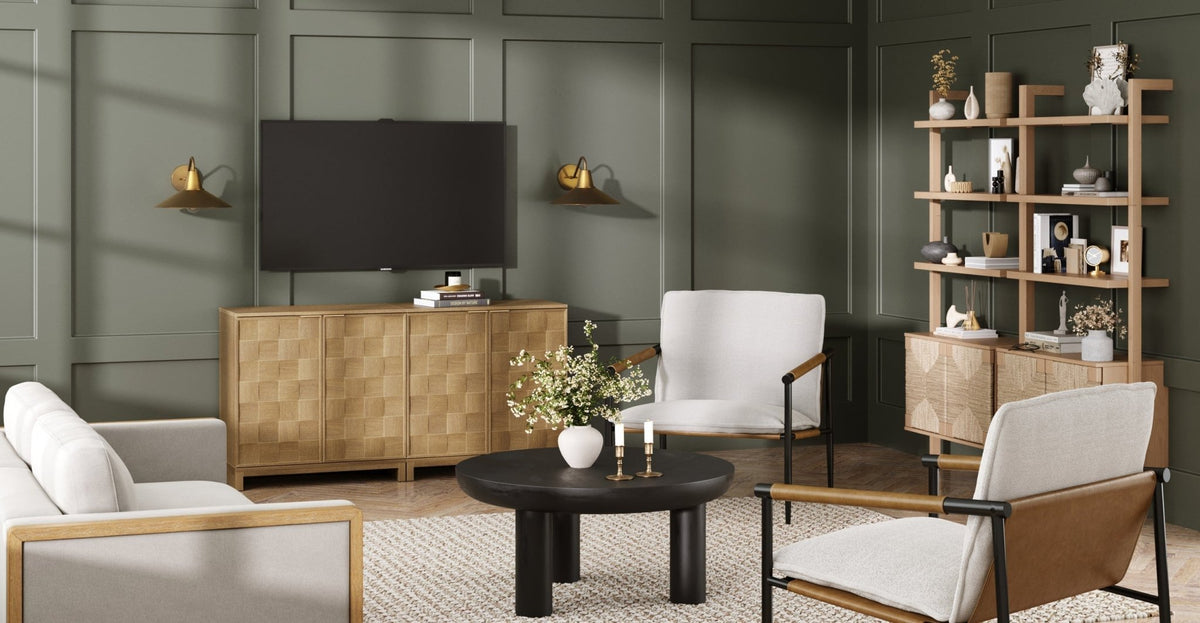
For a symmetrical look, try similarly sized artwork or wall lights on either side.
For something more relaxed, balance one taller element on one side with a grouping of smaller elements on the other. A plant, accent chair, bookshelf, or storage cabinet can add height and help connect the TV area with the rest of the room.
On a larger wall, you can also frame the television with bookshelves or storage pieces. This works especially well when you want the TV wall to feel more like a complete furniture arrangement and less like a single console floating against a large wall.
Don't feel obligated to fill both sides, though. If the room already has furniture nearby, leaving one side intentionally open can feel more natural.

How Do You Decorate the Wall Behind a TV?
Start with the scale of the television. Because a TV is already a large visual element, wall decor should complement it rather than compete with it.
A few options work particularly well:
Add artwork beside the TV.
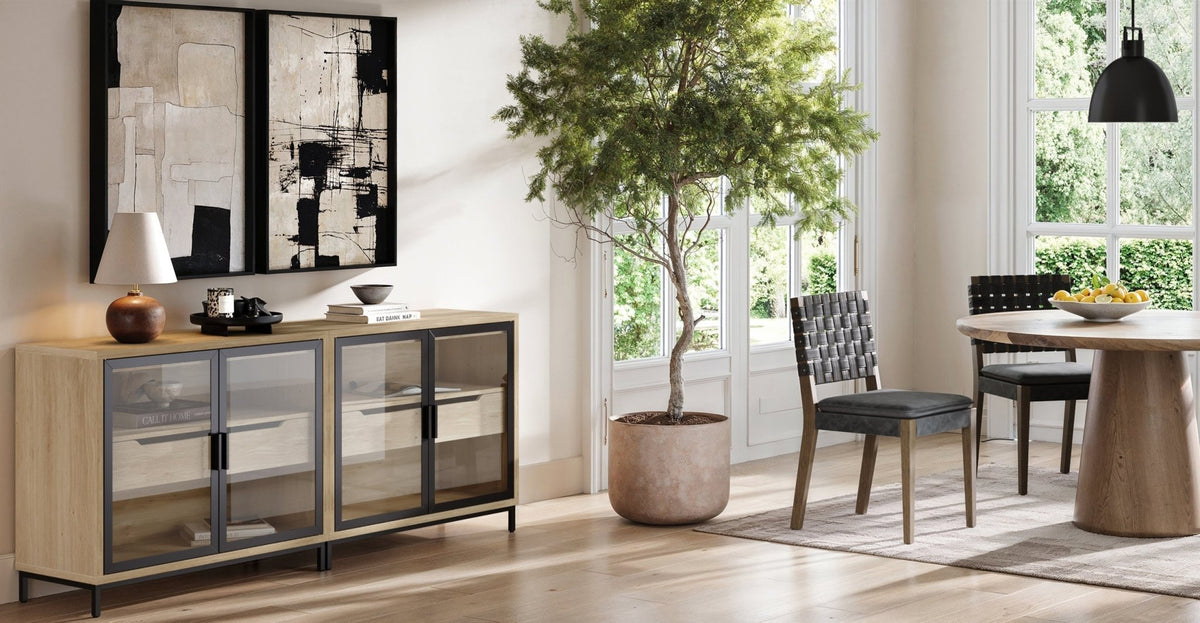
One larger piece or a pair of vertical prints can make the screen feel integrated into the wall.
Create a small gallery arrangement.
Keep spacing consistent and choose frames or artwork that connect with other colors in the room.
Add wall shelves.
Floating wall shelves can introduce books, plants, and decorative objects without using more floor space.
Use wall lighting.
Wall lights and sconces add another layer to the room and can help make the TV area feel more architectural. Position them carefully to avoid glare on the screen
Introduce color or texture.
A warmer paint color or subtle wall treatment can reduce the contrast between a black screen and a bright wall.
Whichever route you choose, don't treat every empty spot as a problem to solve. Leaving open wall space around the television can make the entire arrangement feel more polished.

How Do You Hide TV Cords, Remotes, and Media Clutter?
The easiest way to make a TV area look more pulled together is to give the less-stylish essentials somewhere to go.
A TV console with closed cabinets or drawers can keep controllers, remotes, cables, manuals, and other accessories out of sight while still keeping them nearby.
If you need more room, adding coordinating storage cabinets can extend the media area and give everyday clutter a home.
For consoles with open shelving, group smaller items inside boxes or baskets rather than filling every shelf with separate objects. Leave some shelf space open so the arrangement still feels light.
For cords, group and route them as neatly as possible behind the console and keep visible cables to a minimum. Just make sure electronics still have the ventilation and access they require.
How Do You Style a Mid-Century Modern TV Stand?
With a mid-century modern TV stand, let the furniture's clean lines and warm materials do most of the work.
Rather than filling the console with retro-inspired accessories, use a few contemporary pieces that complement the design: curved ceramics, wood accents, abstract artwork, books, or simple metal details.
Then carry one or two elements into the rest of the room. A mid-century modern coffee table, for example, can repeat the warmth or shape of the TV console without creating a perfectly matched furniture set.
This is also a good place to mix styles. A mid-century console can sit comfortably with organic modern, Scandinavian, or contemporary pieces when the finishes and proportions have something in common.
A room tends to feel more collected when furniture relates without looking like it all came from the same set.
How Do You Style a Large TV Wall?
The bigger the wall, the more important scale becomes.
Rather than adding lots of small artwork and accessories, start with larger pieces. An entertainment center, bookshelves or coordinating storage cabinets can visually expand the furniture arrangement so it feels proportional to the television and wall
For particularly wide setups, an extra-wide TV console can give a large television a stronger visual base.
Then layer decor selectively. A few larger objects usually look more intentional than many small pieces scattered across a long surface.
How Do You Make the TV Area Match the Rest of the Living Room?
Repeat a few details from the TV area throughout the room.
If your console has a warm wood finish, bring a similar tone into a coffee table, picture frame or furniture leg. If it has black details, repeat black elsewhere in smaller doses. If the console has curved doors or rounded edges, echo that shape with a chair, table, or decorative object.
An accent chair placed near the media area can also balance the layout while creating another focal point besides the television.
Plants are useful for the same reason. A taller plant beside the console adds height and softens the straight lines of the TV, while a smaller plant can bring a little movement to a shelf or tabletop.
Think repetition, not matching. Two or three related details across a room are usually enough to make everything feel connected.
How Do You Keep a TV Wall From Looking Cluttered?
The easiest answer: stop before every surface is full.
Once you've styled the area, stand across the room and look at the TV wall as a whole. If your eye doesn't know where to land, take something away.
Before calling it finished, check that:
- Nothing blocks the screen.
- The console feels proportional to the television and wall.
- Cords and electronics are mostly out of sight.
- Decor doesn't interfere with speakers or other devices.
- Colors and materials connect with the rest of the living room.
- There's a mix of height and texture.
- Some wall and surface space remains intentionally empty.
A well-styled TV area doesn't have to hide the fact that there's a television in the room. Start with the right TV stand or media console, add just enough around it to create balance, and leave a little breathing room.
Your TV wall should feel finished-but still like somewhere you actually live.