


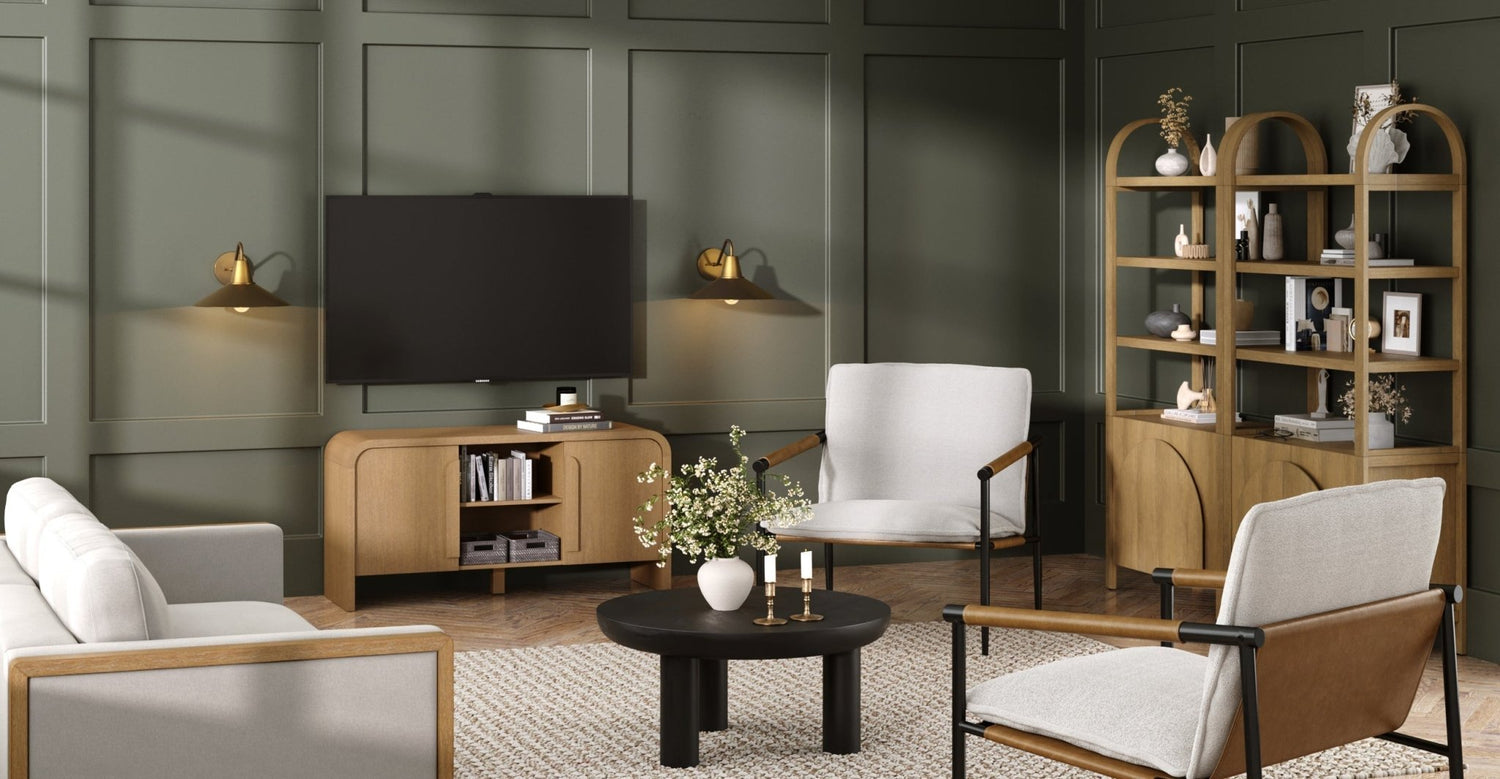
Choosing the right TV console is not just about matching your TV. It is about proportion, comfort, storage, and how the piece fits into your living room as a whole.
A console that is too small makes the TV feel unstable.
A console that is too large overwhelms the wall.
A console that is too tall or too low affects how comfortable it is to watch.
At Nathan James, we design modern TV consoles that balance clean mid century style with real world function. That means thinking through width, height, depth, and layout before the piece ever enters your home.
This guide walks you through each step so you can choose confidently and avoid sizing mistakes.

Step 1: Measure the Actual Width of Your TV Before Anything Else
The first and most important measurement is not the diagonal screen size. It is the actual left to right width of your TV frame.
TVs are sold by diagonal measurement, but consoles support width. If you only look at the screen size number, you risk buying something that is too narrow.
For example:
- A 50 inch TV is usually about 44 inches wide
- A 55 inch TV is about 48 inches wide
- A 65 inch TV is about 57 inches wide
- A 75 inch TV is about 66 inches wide
Always measure your specific TV.
Now apply the core rule:
Your TV console should be at least as wide as your TV.
Ideally, it should extend 6 to 12 inches beyond the TV on each side.
This extra width:
- Creates visual balance
- Makes the setup feel grounded
- Adds space for decor or speakers
-
Improves overall proportion
Nathan James offers TV consoles in multiple widths so you can match your exact TV size while maintaining a modern, clean silhouette.
TV Console Width Recommendations by TV Size
Once you know your TV width, you can narrow your console options quickly.
If your TV measures 44 to 48 inches wide
Choose a console between 55 and 65 inches wide.
If your TV measures about 57 inches wide
Choose a console between around 65 and 95 inches wide depending on how much extra surface space you prefer on each side.
If your TV measures around 66 inches wide
Choose a console 95 inches or wider.
Wider consoles almost always look more intentional than ones that barely match the TV width.
Step 2: Choose a Height That Supports Comfortable Viewing
Height is just as important as width. Even if the console looks good, it must also feel good when you are watching TV for long periods.
When seated on a sofa, your eyes naturally sit about 42 to 48 inches above the floor. The center of your TV screen should align close to that level.
Most sofas have seat heights between 17 and 19 inches. Most TV consoles range between 22 and 26 inches tall.
If your TV sits directly on the console, a height between 22 and 26 inches works for most living rooms.
If the console is too tall:
- You look upward
- Neck strain increases
- The setup feels awkward
If it is too low:
- You look downward
- Long viewing sessions feel uncomfortable
Nathan James TV consoles are proportioned to align naturally with standard sofa heights, making it easier to achieve comfortable eye level without overthinking it.
Step 3: Depth Must Support Stability and Equipment
Depth is often overlooked, but it plays a major role in stability and functionality.
Most TV consoles are between 15 and 20 inches deep. That may seem standard, but your equipment determines what works.
Before choosing depth, check:
- The spacing of your TV legs
- The depth of your soundbar
- The size of gaming systems
- The space required for cable routing
If the console is too shallow:
- TV feet may hang off the edge
- Stability is reduced
-
Cables become cramped
If it is too deep:
- It pushes into walking space
- The room feels tighter
Slimmer consoles work well in apartments and smaller living rooms. Slightly deeper consoles help anchor larger spaces.
Step 4: Consider the Size of the Wall Behind the Console
Your TV console should feel proportional not just to the TV, but to the wall behind it.
If your wall is large and open, a narrow console can look undersized even if it technically supports the TV.
A helpful design guideline is this:
The console should fill about two thirds to three quarters of the visible wall width.
For example, on a 12 foot wall, a console between 70 and 90 inches wide will feel more balanced than a narrow 48 inch piece.
Nathan James mid century modern consoles often use longer widths paired with slim legs. This gives the piece visual presence without heaviness.
Small Living Room Versus Large Living Room Planning
Room size changes how proportion feels.
In smaller apartments or condos:
- Choose slimmer depths
- Avoid overly tall consoles
- Keep width proportional but not oversized
- Prioritize hidden storage
In larger open concept homes:
- Wider consoles help anchor the wall
- Slightly taller pieces can add presence
- Longer designs feel more intentional
Matching console scale to room size creates a finished look instead of a mismatched one.
Mounted TV Versus TV Sitting on the Console
How your TV is positioned affects your sizing decisions.
If your TV sits directly on the console:
- Width must exceed TV width
- Depth must support the legs
-
Height is critical for comfort
If your TV is mounted:
- Height flexibility increases
- You can focus more on storage
- A slightly wider console can improve balance
Mounted setups offer flexibility. Resting setups require more precise measurement.
Floating Console Versus Floor Console
Floating consoles create a modern, minimal feel. They work well in contemporary spaces and smaller rooms where visual openness matters.
Floor consoles:
- Offer more enclosed storage
- Hide cables more easily
- Feel grounded and substantial
- Support TVs that are not mounted
Nathan James primarily designs floor based modern consoles with slim legs. This creates a lighter visual feel while still offering storage and structure.
Do Not Overlook Cable Management
Even the perfect size console can look messy if cables are not planned properly.
Before choosing a console, check:
- Wall outlet location
- Power strip placement
- Ventilation needs for devices
-
Cable routing space
Nathan James TV consoles include cable management cutouts to help keep setups clean and organized.
Planning this detail in advance prevents frustration later.
Common TV Console Sizing Mistakes
These are the most common errors people make:
- Choosing a console narrower than the TV
- Ignoring the actual measured width
- Forgetting to measure TV leg spacing
- Buying too tall for sofa height
- Not considering wall scale
- Ignoring depth requirements
Avoiding these mistakes makes the entire process smoother.
Quick Decision Checklist Before You Buy
Use this checklist to confirm your choice:
- Measured actual TV width
- Selected console wider than the TV
- Verified height aligns with sofa eye level
- Confirmed depth supports equipment
- Considered wall proportion
- Planned storage needs
- Checked cable management
If each step is complete, you can order confidently.

Frequently Asked Questions
Should a TV console be wider than the TV?
Yes. It should extend at least 6 inches beyond each side for balance.
What is the standard height for a TV console?
Most range between 22 and 30 inches tall.
Can a TV stand be the same width as the TV?
It can, but it often looks cramped and less stable.
How deep should a TV console be?
Typically 15 to 20 inches deep. Measure your TV legs first.
Does mounting the TV change console size?
Yes. Mounted TVs allow more flexibility in height and width.
What sizes does Nathan James offer?
Nathan James offers modern mid century inspired TV consoles in multiple widths and storage configurations designed to fit popular TV sizes and contemporary living spaces.
Final Answer
Start with the actual width of your TV. Choose a console that is wider. Confirm height supports comfortable viewing. Make sure depth supports stability. Match the piece to your wall size and storage needs.
When proportion is correct, the room feels intentional.
When sized properly, a Nathan James TV console becomes the anchor of your living space, not just a place to set your TV.


