Dining room trends for 2026
Dining room trends for 2026 center on warm materials, layered lighting, richer color, and spaces that balance everyday use with hosting. Whether you have a separate dining room or a corner of the kitchen, start with comfortable seating and a table that fits the way you gather.
Think weekday dinners, a little homework, and the occasional meal that turns into a long conversation. Your dining space can make room for all of it.
What is changing in dining rooms in 2026?
Dedicated dining rooms and casual dining areas are both getting attention. ELLE Decor reports renewed interest in separate rooms for hosting, while Homes & Gardens highlights dining nooks and rooms that serve more than one purpose.
For your home, the useful takeaway is to give the dining area a clear purpose, even when it shares space with the kitchen or living room. A pendant above the table, art on the wall, or a cabinet for serving pieces can help it feel thoughtfully arranged.
How can you bring more warmth into a dining room?
Start with wood, then add texture through seating and textiles. Homes & Gardens identifies walnut tones and tactile finishes among its 2026 dining room directions.
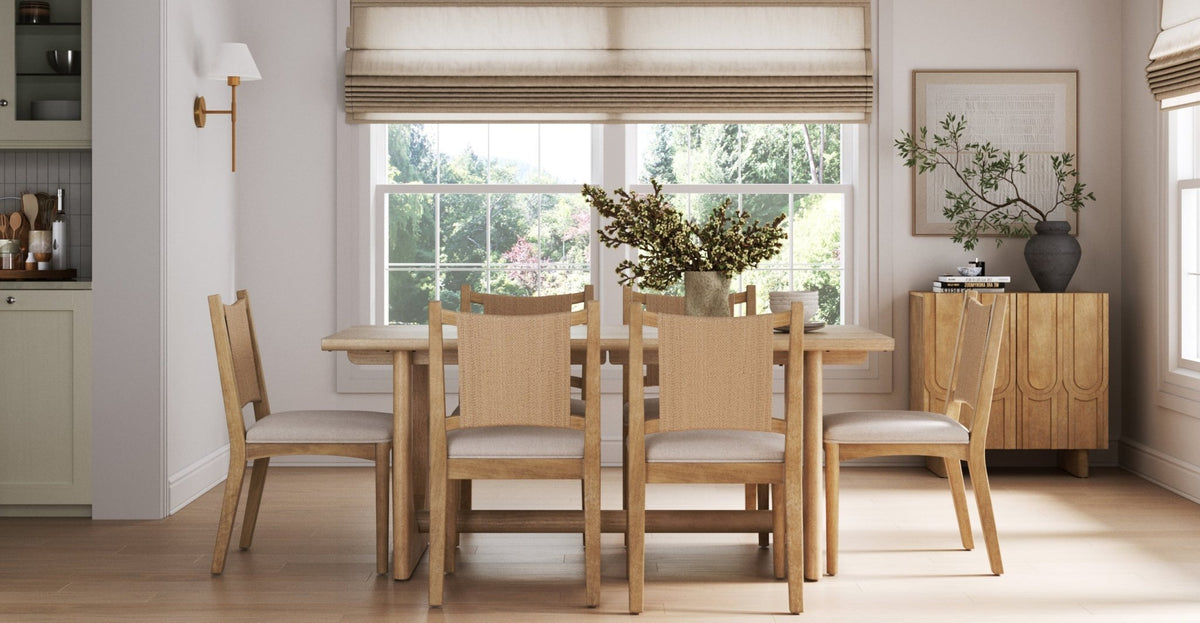
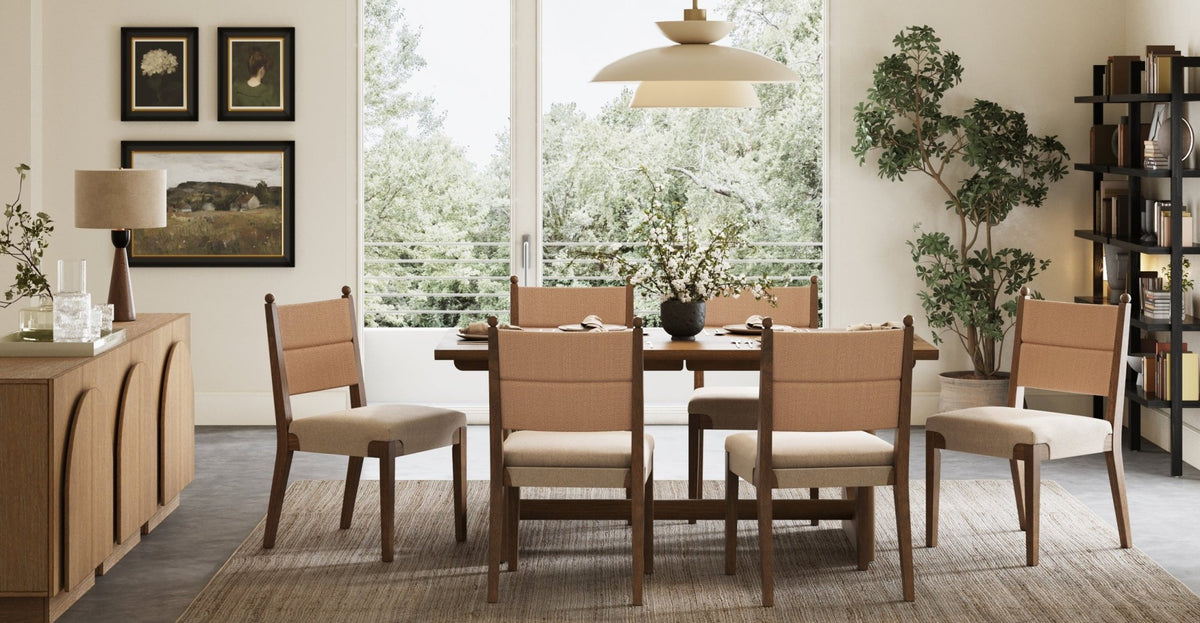
You can get that welcoming feeling with light wood, too. Try a wood dining table with cream upholstery, linen curtains, and a simple ceramic centerpiece. If your table has a darker finish, softer wall colors can balance its visual weight
Keep the mix considered:
- Let one finish lead. Repeat the table's warm undertone in a frame or cabinet.
- Vary the texture. Smooth wood and textured upholstery give the room more depth.
- Leave some breathing room. A few useful, well-chosen pieces keep the table ready for dinner.
Coordinating pieces do not need identical finishes. Try repeating a color or rounded detail to connect them.
What lighting works best over a dining table?

Combine a fixture over the table with another light source nearby. Softer, layered lighting is one of the approaches highlighted in 2026 trend coverage.
A pendant light can define the dining area, while a wall light adds illumination beyond the tabletop. Dimming gives you more flexibility for meals, homework, and hosting; check that the fixture, bulbs, and dimmer are compatible.
For an 8-foot ceiling, start with the bottom of the pendant 30–36 inches above the tabletop. Adjust for the fixture's size and sight lines, and follow its installation instructions. Lumens uses this range in its dining lighting guidance.
Before settling on the height, sit at both ends of the table. You should be able to see the person across from you without the shade getting in the way. Check out our collection of lighting to add layers of light to your dining room.
How do you make a dining room work for everyday meals and guests?
Choose furniture for your usual headcount, then plan for the extra seats you need when hosting. Multifunctional dining spaces are part of the 2026 discussion, but flexibility should suit your actual routine.
An extendable table is useful if you host occasionally. Nathan James's extendable dining tables includes a table configuration with leaf extensions for up to eight people. Explore the dining table collection and check the dimensions in both configurations before choosing.
Comfort deserves the same attention as capacity. When comparing dining chairs, check the overall width, seat height, and whether armrests fit beneath the table's apron. Upholstery care instructions matter, too, especially if the table sees daily use.
For a room that also hosts homework or work, use a storage cabinet to keep supplies and serving pieces close by. Clearing the tabletop makes the shift back to dinner a little easier.
How much space should you leave around a dining table?

Use at least 36 inches from the table edge to a wall or nearby furniture as a starting point. Allow roughly 24 inches of table edge per person, then check the actual chair widths and table-leg positions. These are common planning guidelines, rather than a guarantee that every layout will fit.
For example, a 72-by-36-inch table needs a 12-by-9-foot clear area to provide 36 inches on every side. Measure to the front of a cabinet rather than the wall behind it. A busy route behind seated diners may need more room.
If you add a rug, aim for about 24–28 inches beyond each table edge so chairs can stay on it when pulled out. IKEA recommends approximately 60–70 centimeters, or 24–28 inches. A flat woven or low-pile rug also makes moving chairs easier.
An 8-by-10-foot rug under that 72-by-36-inch table gives you 24 inches at each end and 30 inches along each side. Check the fit with the chairs you will use, and measure again with any table extensions in place.
How can you refresh a dining room without replacing everything?
Start with the part of the room that makes everyday use less comfortable.
- Chairs feel uncomfortable? Prioritize supportive seating before adding decor.
- The room feels stark? Add texture through curtains or upholstered chairs.
- Dinner feels too brightly lit? Consider compatible dimmable lighting.
- The layout feels cramped? Measure the table clearance and move unnecessary furniture.
- The space feels unfinished? Add one piece of art or a cabinet that gives useful items a home.
Let the room come together over time. A dining space that feels good to use is one you will keep coming back to, for everyday meals and the evenings that last a little longer.